
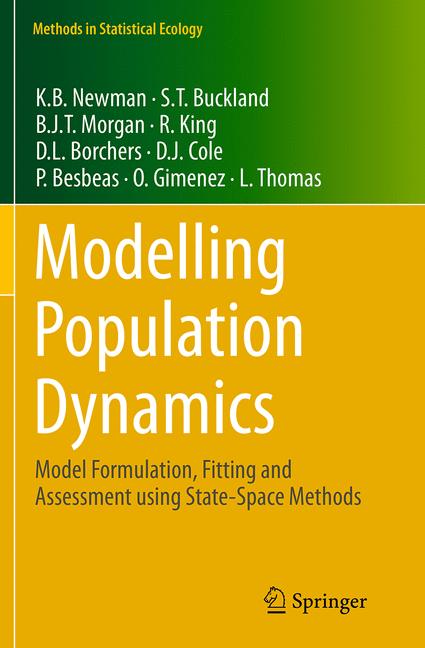
Modelling Population Dynamics
☆☆☆☆☆
(0 reviews)
Lowest price (incl. delivery)
18 614,00 JPY
Typical price1 686,17 PLN
Lowest (90 days)87,50 PLN
Offers6
Last updatedpřed 1 týdnem
Price history (90 days)
Full history
2026-08-08
2026-08-15
| Aktualizováno | Cena |
|---|---|
| 2026-08-08 | 87,50 |
| 2026-08-15 | 87,50 |
| Prodejce | Product price | Delivery | Celkem | Dostupnost | Updated | |
|---|---|---|---|---|---|---|
| SP SpringerNatureLink Shop INT | 18 589,00 JPY | 25,00 JPY | 18 614,00 JPY | Dostupné | před 4 dny | View offer |
| SP Springer Nature Author | 18 589,00 JPY | free | 18 589,00 JPY | Dostupné | před 1 týdnem | View offer |
| SP SpringerNatureLink Shop INT | 129,99 USD | free | 129,99 USD | Dostupné | před 4 dny | View offer |
| SP SpringerNatureLink Shop INT | 139,99 USD | 25,00 USD | 164,99 USD | Dostupné | před 4 dny | View offer |
| SP SpringerNatureLink Shop INT | 139,99 USD | 15,00 USD | 154,99 USD | Dostupné | před 4 dny | View offer |
| SP SpringerNatureLink Shop INT | 153,50 EUR | 15,00 EUR | 168,50 EUR | Dostupné | před 4 dny | View offer |
Ceny a dostupnost se mohou změnit. Naposledy aktualizováno: 08.08.2026 22:23.
0,0
☆☆☆☆☆
0 reviews
5★
0%
4★
0%
3★
0%
2★
0%
1★
0%
Product reviews
No reviews yet — be the first!
This book gives a unifying framework for estimating the abundance of open populations: populations subject to births, deaths and movement, given imperfect measurements or samples of the populations. The focus is primarily on populations of vertebrates for which dynamics are typically modelled within the framework of an annual cycle, and for which stochastic variability in the demographic processes is usually modest. Discrete-time models are developed in which animals can be assigned to discrete states such as age class, gender, maturity, population (within a metapopulation), or species (for multi-species models). The book goes well beyond estimation of abundance, allowing inference on underlying population processes such as birth or recruitment, survival and movement. This requires the formulation and fitting of population dynamics models. The resulting fitted models yield both estimates of abundance and estimates of parameters characterizing the underlying processes.
Similar products
 50 Years of Philosophy and Medicine
from $107.30
50 Years of Philosophy and Medicine
from $107.30
 Understanding Cybersecurity Law and Digital Privacy
from $122.63
Understanding Cybersecurity Law and Digital Privacy
from $122.63
 Decisions in International Trade and Logistics
from $122.63
Decisions in International Trade and Logistics
from $122.63
 Advances in Economic Measurement
from $122.63
Advances in Economic Measurement
from $122.63
 Nanomaterials
from $137.96
Nanomaterials
from $137.96
 Sustainable Scaffolds-based Strategies in Tissue Engineering and Regenerative Medicine
from $162.87
Sustainable Scaffolds-based Strategies in Tissue Engineering and Regenerative Medicine
from $162.87
 Narratives in Educational Research
from $162.87
Narratives in Educational Research
from $162.87
 Environmental Biology of the Young Chinese Sturgeon
from $210.78
Environmental Biology of the Young Chinese Sturgeon
from $210.78