
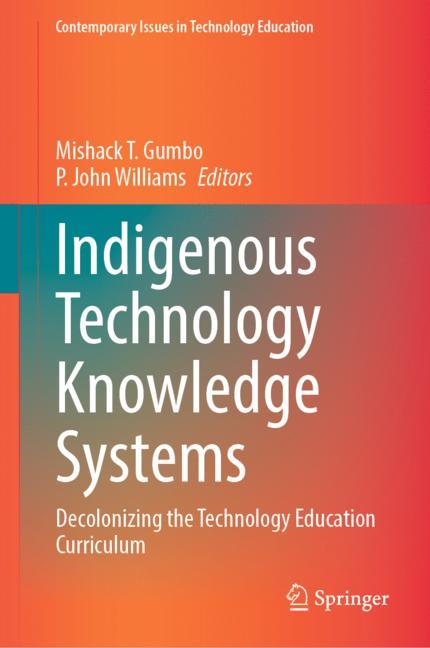
Indigenous Technology Knowledge Systems
☆☆☆☆☆
(0 reviews)
Lowest price (incl. delivery)
139,00 USD
Typical price139,00 PLN
Lowest (90 days)139,00 PLN
Offers2
Last updatedpřed 5 dny
| Prodejce | Product price | Delivery | Celkem | Dostupnost | Updated | |
|---|---|---|---|---|---|---|
| SP Springer Nature Author | 139,00 USD | free | 139,00 USD | Dostupné | před 5 dny | View offer |
| SP SpringerNatureLink Shop INT | 111,50 GBP | 29,00 GBP | 140,50 GBP | Dostupné | před 5 dny | View offer |
Ceny a dostupnost se mohou změnit. Naposledy aktualizováno: 08.08.2026 22:14.
EAN
9789819913961
Springer Nature
0,0
☆☆☆☆☆
0 reviews
5★
0%
4★
0%
3★
0%
2★
0%
1★
0%
Product reviews
No reviews yet — be the first!
There has been a growing interest in indigenous knowledge systems and research. This interest has been mainly triggered by the need to decolonize education as a response to the colonial onslaught on indigenous knowledge and people. Research has, however, concentrated on the generality of the indigenous knowledge system rather than on its related dimensions. One area that has suffered a lack of attention is indigenous conceptions of science, technology, engineering, and mathematics (STEM) despite the unquestionable evidence of STEM in indigenous contexts. Most STEM is presented by colonial establishments and representations, especially in developed/modern/urban contexts, which portray STEM as a colonial construct. This book focuses on indigenous technological knowledge systems education (ITKSE). Indigenous people have been at the front of technological developments from pre-colonial times. The list of precolonial industries, science, and technology is extensive, including blacksmithing, wood-carving, textile-weaving and dyeing, leather works, beadworks, pottery making, architecture, agricultural breeding, metal-working, salt production, gold-smithing, copper-smithing, leather-crafting, soap-making, bronze-casting, canoe-building, brewing, glass-making, and agriculture, for example. In some parts of the world such as Africa and Australia, these technologies still exist. ITKSE should not be left to exist outside of the technology education curriculum and classroom as it can benefit both indigenous students, who have been denied learning about what is relevant to them, and non-indigenous students. These cultural groups can expand their knowledge of technology by learning both ITKSE and Western technological knowledge systems education (WTKSE). ITKSE also presents opportunities for technology teachers to reflect on and revisit their depth of technological knowledge, pedagogies, and assessment. The intent of this bookis transformational in the sense that it brings decolonial and indigenous perspectives into the technology education context. It extends technology education in the sense that it will not only influence Western-minded architects, artisans, designers, etc. but encourage indigenous-mindedness as well.
Similar products
 Patient Safety Coaching
from $91.97
Patient Safety Coaching
from $91.97
 Ethnography and Diversity
from $69.30
Ethnography and Diversity
from $69.30
 Smart Villages
from $91.97
Smart Villages
from $91.97
 Nuclear Non-Proliferation in International Law - Volume VI
from $91.97
Nuclear Non-Proliferation in International Law - Volume VI
from $91.97
 The Price of Freedom
from $91.97
The Price of Freedom
from $91.97
 Eco-Social Policy in the OECD and the World Bank
from $91.97
Eco-Social Policy in the OECD and the World Bank
from $91.97
 Special Topics in Policing
from $122.58
Special Topics in Policing
from $122.58
 Music from the Heart
from $91.97
Music from the Heart
from $91.97