
Divided Languages?
☆☆☆☆☆
(0 reviews)
Lowest price (incl. delivery)
7 149,00 JPY
Typical price563,11 PLN
Lowest (90 days)35,99 PLN
Offers6
Last updatedpřed 1 týdnem
Price history (90 days)
Full history
2026-08-08
2026-08-15
| Aktualizováno | Cena |
|---|---|
| 2026-08-08 | 39,99 |
| 2026-08-14 | 35,99 |
| 2026-08-15 | 51,99 |
| Prodejce | Product price | Delivery | Celkem | Dostupnost | Updated | |
|---|---|---|---|---|---|---|
| SP SpringerNatureLink Shop INT | 7 149,00 JPY | free | 7 149,00 JPY | Dostupné | před 6 dny | View offer |
| SP Springer Nature Author | 7 149,00 JPY | 29,00 JPY | 7 178,00 JPY | Dostupné | před 1 týdnem | View offer |
| SP SpringerNatureLink Shop INT | 49,99 USD | 29,00 USD | 78,99 USD | Dostupné | před 6 dny | View offer |
| SP SpringerNatureLink Shop INT | 54,99 USD | free | 54,99 USD | Dostupné | před 6 dny | View offer |
| SP SpringerNatureLink Shop INT | 54,99 USD | free | 54,99 USD | Dostupné | před 6 dny | View offer |
| SP SpringerNatureLink Shop INT | 59,00 EUR | free | 59,00 EUR | Dostupné | před 6 dny | View offer |
Ceny a dostupnost se mohou změnit. Naposledy aktualizováno: 08.08.2026 23:08.
0,0
☆☆☆☆☆
0 reviews
5★
0%
4★
0%
3★
0%
2★
0%
1★
0%
Product reviews
No reviews yet — be the first!
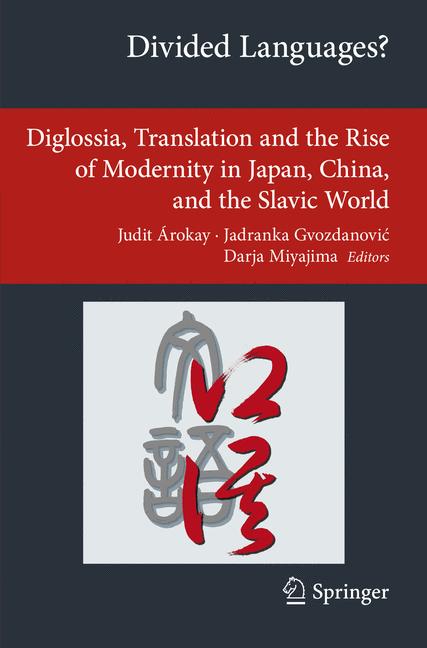
The present volume is a collection of papers presented at the international conference “Linguistic Awareness and Dissolution of Diglossia” held in July 2011 at Heidelberg University. The aim is to reevaluate and compare the processes of dissolution of diglossia in East Asian and in European languages, especially in Japanese, Chinese and in Slavic languages in the framework of the asymmetries in the emergence of modern written languages. Specialists from China, Japan, Great Britain, Germany and the U.S. contributed to the volume by introducing their research focusing on aspects of the dissolution of diglossic situations and the role of translation in the process. The first group of texts focuses on the linguistic concept of diglossia and the different processes of its dissolution, while the second investigates the perception of linguistic varieties in historical and transcultural perspectives. The third and final group analyses the changing cultural role and function of translations and their effect on newly developing literary languages.
Similar products
 50 Years of Philosophy and Medicine
from $107.30
50 Years of Philosophy and Medicine
from $107.30
 Understanding Cybersecurity Law and Digital Privacy
from $122.63
Understanding Cybersecurity Law and Digital Privacy
from $122.63
 Decisions in International Trade and Logistics
from $122.63
Decisions in International Trade and Logistics
from $122.63
 Advances in Economic Measurement
from $122.63
Advances in Economic Measurement
from $122.63
 Nanomaterials
from $137.96
Nanomaterials
from $137.96
 Sustainable Scaffolds-based Strategies in Tissue Engineering and Regenerative Medicine
from $162.87
Sustainable Scaffolds-based Strategies in Tissue Engineering and Regenerative Medicine
from $162.87
 Narratives in Educational Research
from $162.87
Narratives in Educational Research
from $162.87
 Environmental Biology of the Young Chinese Sturgeon
from $210.78
Environmental Biology of the Young Chinese Sturgeon
from $210.78