
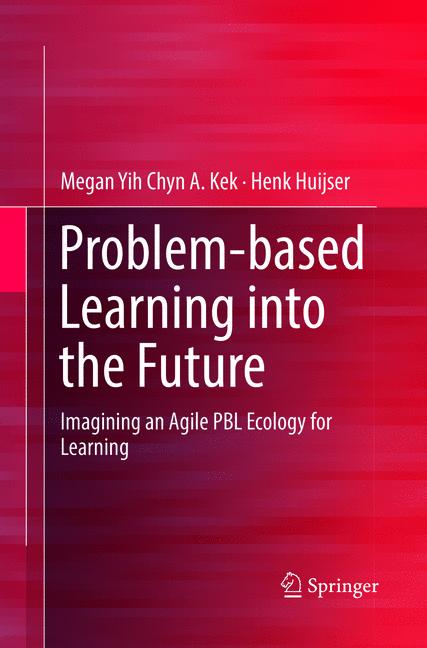
Problem-based Learning into the Future
☆☆☆☆☆
(0 reviews)
Lowest price (incl. delivery)
14 324,00 JPY
Typical price658,93 PLN
Lowest (90 days)84,99 PLN
Offers2
Last updatedمنذ 16 ساعة
| البائع | Product price | Delivery | الإجمالي | التوفر | Updated | |
|---|---|---|---|---|---|---|
| SP Springer Nature Author | 14 299,00 JPY | 25,00 JPY | 14 324,00 JPY | متوفر | منذ 16 ساعة | View offer |
| SP SpringerNatureLink Shop INT | 109,99 USD | 25,00 USD | 134,99 USD | متوفر | منذ يوم | View offer |
قد تتغيّر الأسعار والتوفر. آخر تحديث: 08.08.2026 23:21.
0,0
☆☆☆☆☆
0 reviews
5★
0%
4★
0%
3★
0%
2★
0%
1★
0%
Product reviews
No reviews yet — be the first!
In this book we respond to a higher education environment that is on the verge of profound changes by imagining an evolving and agile problem-based learning ecology for learning. The goal of doing so is to humanise university education by pursuing innovative approaches to student learning, teaching, curricula, assessment, and professional learning, and to employ interdisciplinary methods that go far beyond institutional walls and include student development and support, curriculum sustainability, research and the scholarship of teaching and learning, as well as administration and leadership. An agile problem-based learning (PBL) ecology for learning deliberately blurs the boundaries between disciplines, between students and teachers, between students and employers, between employers and teachers, between academics and professional staff, between formal and informal learning, and between teaching and research. It is based on the recognition that all of these elements are interconnected and constantly evolving, rather than being discrete and static. Throughout this book, our central argument is that there is no single person who is responsible for educating students. Rather, it is everyone’s responsibility – teachers, students, employers, administrators, and wider social networks, inside and outside of the university. Agile PBL is about making connections, rather than erecting barriers. In summary, this book is not about maintaining comfort zones, but rather about becoming comfortable with discomfort. The actual implementation is beyond the scope of this book and we envisage that changing perceptions towards this vision will itself be a mammoth task. However, we believe that the alternative of leaving things as they are would ultimately prove untenable, and more distressingly, would leave a generation of students afraid to think, feel, and act for themselves, let alone being able to face the challenges of the 21st century.
Similar products
 Patient Safety Coaching
from $91.97
Patient Safety Coaching
from $91.97
 Ethnography and Diversity
from $69.30
Ethnography and Diversity
from $69.30
 Smart Villages
from $91.97
Smart Villages
from $91.97
 Nuclear Non-Proliferation in International Law - Volume VI
from $91.97
Nuclear Non-Proliferation in International Law - Volume VI
from $91.97
 The Price of Freedom
from $91.97
The Price of Freedom
from $91.97
 Eco-Social Policy in the OECD and the World Bank
from $91.97
Eco-Social Policy in the OECD and the World Bank
from $91.97
 Special Topics in Policing
from $122.58
Special Topics in Policing
from $122.58
 Music from the Heart
from $91.97
Music from the Heart
from $91.97